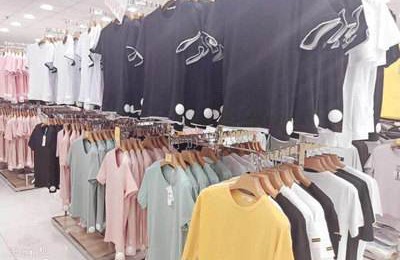

The issue of RMB has once again become the focus of manufacturing industries such as textiles and clothing
Abstract: At present, the pricing and settlement ability of RMB is very limited, and the US dollar, Euro, etc. are still important settlement currencies in my country’s textile and apparel exports. From the current point of view, the positive effect of RMB on textile and clothing exports has not yet been fully demonstrated. Before the implementation of the RMB cross-border foreign trade settlement pilot program, all textile and apparel exports were denominated and settled in foreign currencies, and export settlement was completed in two steps: export exchange collection and export settlement. Using foreign exchange pricing and settlement, short-term foreign exchange
Key words:
The current pricing and settlement capabilities of the RMB are very limited, and the U.S. dollar, euro, etc. are still important settlement currencies in my country’s textile and apparel exports. From the current point of view, the positive effect of RMB on textile and clothing exports has not yet been fully demonstrated.
Before the implementation of the RMB cross-border foreign trade settlement pilot program, all textile and apparel exports were denominated and settled in foreign currencies, and export settlement was completed in two steps: export exchange collection and export settlement. Using the method of foreign exchange pricing and settlement, a sharp short-term depreciation of foreign exchange will bring greater exchange losses to textile and apparel exports.
The post-RMB exchange rate will have certain positive impacts on textile and apparel exports, such as reducing exchange rate risks. However, the development of this positive effect is subject to whether textile and clothing export enterprises have pricing power in export trade negotiations and the extent of the RMB.
On September 20, the People’s Bank of China issued an announcement authorizing the New York Branch of the Bank of China to serve as the U.S. RMB clearing bank. This not only marks a new level of Sino-US financial cooperation, but is also another important milestone in the process of RMB.
As a large economy, the U.S. market has always been a battleground for military strategists. The establishment of the RMB clearing bank will further facilitate the use of RMB and cross-border transactions in the United States, and promote Sino-US two-way trade, investment and economic cooperation to a new level.
On October 1, the RMB was officially included in the Special Drawing Rights (SDR) of the International Monetary Fund (IMF), paving the way for the RMB. The RMB has officially joined the SDR currency basket, which means that both the IMF itself and its 189 member countries theoretically recognize the RMB as a reserve currency.
As industries and capital go abroad through the “One Belt, One Road” initiative, the RMB is also accelerating its pace. Experts pointed out that the population of countries along the “One Belt and One Road” accounts for 60% of the total population and nearly 30% of the total economic volume. The “Belt and Road” strategy will help form a “RMB zone” in this long-span economic corridor.
For example, in December 2015, the RMB-Somoni exchange rate listing transaction was successfully held. Enterprises, individuals and banks in my country’s Xinjiang and Tajikistan can use their own currency and the other country’s currency in financial settlements such as trade settlements. This is also an important sign that Xinjiang actively carries out economic and financial cooperation with Tajikistan and serves “going global” enterprises. .
For another example, in September 2015, the Kashgar region of Xinjiang successfully launched the inter-bank cash exchange rate trading between RMB and Pakistani rupees, and held a launching ceremony at the Kashgar Branch of Bank of China. This will not only provide convenient conditions for the settlement of trade and investment funds between New Zealand and Pakistan, but will also effectively expand the transaction channels for customers of both parties and expand the scope of financial cooperation.
Recently, reporters exclusively interviewed Liang Yanfen, director and researcher of the Economic Research Institute of the Ministry of Commerce Research Institute, to explore the above three financial events and their boost to Chinese textile and apparel export companies.
Depending on the degree, currency can be divided into three levels: as a pricing and settlement method for international trade; as a tool for international investment and international lending; and as one of the currencies of other countries’ foreign exchange reserves.
This time, what proportion will the RMB account for when included in the International Monetary Fund? Liang Yanfen explained to reporters: “SDR is a reserve asset and accounting unit created by the IMF. Before the RMB was added, the main It consists of four currencies: the US dollar, the euro, the Japanese yen and the British pound. Their shares in the SDR currency basket are 41.9% for the US dollar, 37.4% for the euro, 11.3% for the British pound, and 9.4% for the Japanese yen. After the entry of the RMB, its share is 10.92 %, and the shares of the U.S. dollar, euro, Japanese yen, and pound sterling were adjusted accordingly to 41.73%, 30.93%, 8.33%, and 8.09%, which were 0.17, 6.47, 3.21, and 1.07 percentage points lower than before respectively. According to IMF rules, the basket currencies are included in the SDR. The weight of each currency in the SDR is not static. As the use of currencies in trade and finance changes, the IMF adjusts the share of each currency in the SDR every five years.”
Regarding the positive effect that the RMB will have on China’s textile and apparel export companies when it is included in the SDR and becomes an international reserve currency, Liang Yanfen made predictions from two aspects: “First, joining the SDR means that the RMB will gain International recognition and IMF credit endorsement have great impact on China’s textile and apparel manufacturing industry.For enterprises, it has gained new credit support and guarantee in international financing, which is helpful for Chinese enterprises’ overseas financing; secondly, joining SDR will help enhance market confidence in the RMB, stabilize market expectations, and further expand the use of RMB in cross-border financing. The use of it in cross-border trade and investment settlement is beneficial to the stability of the RMB exchange rate, especially to the stability of the overseas assets of Chinese textile and garment enterprises. ”
AAA
The current pricing and settlement capabilities of the RMB are very limited, and the U.S. dollar, euro, etc. are still important settlement currencies in my country’s textile and apparel exports. From the current point of view, the positive effect of RMB on textile and clothing exports has not yet been fully demonstrated.
Before the implementation of the RMB cross-border foreign trade settlement pilot program, all textile and apparel exports were denominated and settled in foreign currencies, and export settlement was completed in two steps: export exchange collection and export settlement. Using the method of foreign exchange pricing and settlement, a sharp short-term depreciation of foreign exchange will bring greater exchange losses to textile and apparel exports.
The post-RMB exchange rate will have certain positive impacts on textile and apparel exports, such as reducing exchange rate risks. However, the development of this positive effect is subject to whether textile and clothing export enterprises have pricing power in export trade negotiations and the extent of the RMB.
On September 20, the People’s Bank of China issued an announcement authorizing the New York Branch of the Bank of China to serve as the U.S. RMB clearing bank. This not only marks a new level of Sino-US financial cooperation, but is also another important milestone in the process of RMB.
As a large economy, the U.S. market has always been a battleground for military strategists. The establishment of the RMB clearing bank will further facilitate the use of RMB and cross-border transactions in the United States, and promote Sino-US two-way trade, investment and economic cooperation to a new level.
On October 1, the RMB was officially included in the Special Drawing Rights (SDR) of the International Monetary Fund (IMF), paving the way for the RMB. The RMB has officially joined the SDR currency basket, which means that both the IMF itself and its 189 member countries theoretically recognize the RMB as a reserve currency.
As industries and capital go abroad through the “One Belt, One Road” initiative, the RMB is also accelerating its pace. Experts pointed out that the population of countries along the “One Belt and One Road” accounts for 60% of the total population and nearly 30% of the total economic volume. The “Belt and Road” strategy will help form a “RMB zone” in this long-span economic corridor.
For example, in December 2015, the RMB-Somoni exchange rate listing transaction was successfully held. Enterprises, individuals and banks in my country’s Xinjiang and Tajikistan can use their own currency and the other country’s currency in financial settlements such as trade settlements. This is also an important sign that Xinjiang actively carries out economic and financial cooperation with Tajikistan and serves “going global” enterprises. .
For another example, in September 2015, the Kashgar region of Xinjiang successfully launched the inter-bank cash exchange rate trading between RMB and Pakistani rupees, and held a launching ceremony at the Kashgar Branch of Bank of China. This will not only provide convenient conditions for the settlement of trade and investment funds between New Zealand and Pakistan, but will also effectively expand the transaction channels for customers of both parties and expand the scope of financial cooperation.
Recently, reporters exclusively interviewed Liang Yanfen, director and researcher of the Economic Research Institute of the Ministry of Commerce Research Institute, to explore the above three financial events and their boost to Chinese textile and apparel export companies.
Depending on the degree, currency can be divided into three levels: as a pricing and settlement method for international trade; as a tool for international investment and international lending; and as one of the currencies of other countries’ foreign exchange reserves.
This time, what proportion will the RMB account for when included in the International Monetary Fund? Liang Yanfen explained to reporters: “SDR is a reserve asset and accounting unit created by the IMF. Before the RMB was added, the main It consists of four currencies: the US dollar, the euro, the Japanese yen and the British pound. Their shares in the SDR currency basket are 41.9% for the US dollar, 37.4% for the euro, 11.3% for the British pound, and 9.4% for the Japanese yen. After the entry of the RMB, its share is 10.92 %, and the shares of the U.S. dollar, euro, Japanese yen, and pound sterling were adjusted accordingly to 41.73%, 30.93%, 8.33%, and 8.09%, which were 0.17, 6.47, 3.21, and 1.07 percentage points lower than before respectively. According to IMF rules, the basket currencies are included in the SDR. The weight of each currency in the SDR is not static. As the use of currencies in trade and finance changes, the IMF adjusts the share of each currency in the SDR every five years.”
Regarding the positive effect that the RMB will have on China’s textile and apparel export companies when it is included in the SDR and becomes an international reserve currency, Liang Yanfen made predictions from two aspects: “First, joining the SDR means that the RMB will gain International recognition and the IMF’s credit endorsement have given China’s textile and apparel manufacturing industry new credit support and guarantee in international financing, which is helpful for Chinese enterprises’ overseas financing; secondly, joining SDR will help enhance the market’s appreciation of the RMB confidence, stabilize market expectations, and further expand the use of RMB in cross-border trade and investment settlement, which will be beneficial to the stability of the RMB exchange rate, and will especially help stabilize the overseas assets of Chinese textile and apparel companies.”
AAA
Disclaimer:
Disclaimer: Some of the texts, pictures, audios, and videos of some articles published on this site are from the Internet and do not represent the views of this site. The copyrights belong to the original authors. If you find that the information reproduced on this website infringes upon your rights, please contact us and we will change or delete it as soon as possible.
AAAFor the industry, it has gained new credit support and guarantee in international financing, which is helpful for Chinese enterprises’ overseas financing; secondly, joining SDR will help enhance market confidence in the RMB, stabilize market expectations, and further expand the cross-border use of RMB. The use of it in trade and investment settlement is beneficial to the stability of the RMB exchange rate, especially to the stability of the overseas assets of Chinese textile and apparel companies. ”
AAA
Disclaimer:
Disclaimer: Some of the texts, pictures, audios, and videos of some articles published on this site are from the Internet and do not represent the views of this site. The copyrights belong to the original authors. If you find that the information reproduced on this website infringes upon your rights, please contact us and we will change or delete it as soon as possible.
AA