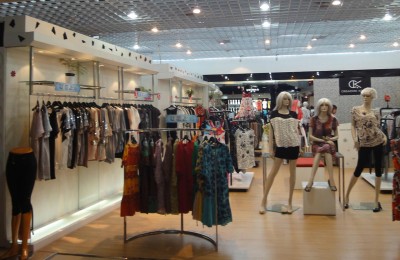

Textile and apparel exports are weak, and the performance of most men’s clothing brands is “cold”
Abstract: Some experts pointed out that the textile and apparel industry is in a downturn, offline traditional retail has not yet picked up, and the growth rate of online retail has gradually slowed down. Recently, listed men’s clothing brands such as Jiumuwang and Busen have released their third-quarter financial reports, with Septwolves and George White leading the revenue growth. Some experts pointed out that the textile and apparel industry is in a downturn, offline traditional retail has not yet picked up, online retail growth has gradually slowed down, and textile and apparel exports are still weak. This is the current situation of the textile and apparel industry.
Key words:
Some experts pointed out that the textile and garment industry is in a downturn, offline traditional retail has not yet picked up, and online Retail growth is gradually slowing down.
Recently, listed men’s clothing brands such as Jiumuwang and Busen have released their third-quarter financial reports, with Septwolves and George White leading the revenue growth. Some experts pointed out that the textile and apparel industry is in a downturn, offline traditional retail has not yet picked up, online retail growth has gradually slowed down, and textile and apparel exports are still weak. This is the current situation of the textile and apparel industry.
Revenue increased slightly but net profit declined
On October 24, the third quarter report released by Septwolves showed that the company achieved operating income of 1.79 billion yuan in the first three quarters, a year-on-year increase of 1.29%; net profit attributable to shareholders of listed companies 169 million yuan, a year-on-year decrease of 7.16%. The announcement predicts that there will be fewer customer orders in the 2016 order fair, so the performance this year is expected to be lower than the same period last year.
However, the semi-annual report released by Septwolves showed that the company achieved operating income of 1.144 billion yuan from January to June 2016, a year-on-year increase of 1.24%; the net profit attributable to shareholders of listed companies was 1.05 billion, a year-on-year decrease of 5.63%. It can be seen from the financial reports of the past three years that continued performance decline has become the norm for the Seven Wolves. Since net profit reached a peak of 561 million yuan in 2012, Septwolves has begun to decline. Net profit in 2013 was 379 million yuan, a year-on-year decrease of 32.44%. This was the company’s first performance decline since its listing. In 2014, net profit was 289 million yuan, a year-on-year decrease of 23.84%. In 2015, Septwolves achieved a net profit of 273 million yuan, a year-on-year decrease of 5.43%. In its previously released performance forecast, Septwolves stated that the company received fewer orders from customers during its 2016 order fair. The company’s poor performance in the past three years is because it is in the process of adjusting to the transformation and reform of its wholesale model, which has affected the revenue and profits of its original business.
A reporter from China Business Daily learned that Septwolves has determined the development strategy of “main business + investment” and proposed to transform from pure industry to an “industry + investment” operating model to create a “fashionable” business model. Group” to build the Septwolves fashion consumption ecosystem. Septwolves said that the company is eliminating ineffective stores, adding missing stores, adjusting store positioning, and trying new store operation models. Statistics show that in 2015, the total number of Septwolves stores was about 2,300, including 400 directly operated stores. Compared with 2,821 stores in 2014, more than 400 stores were closed.
In addition to the Seven Wolves, the third quarter report released by George Bai recently showed that the company achieved operating income of 517 million yuan in the first three quarters, a year-on-year increase of 15.66%; in the third quarter, operating income was 1.58 billion, a year-on-year increase of 12.98%. The announcement stated that the company’s school uniform sales channels have been further expanded, and orders for school uniforms and professional wear have increased. The company is optimistic about the company’s layout in the field of mid-to-high-end school uniforms and continues to pay attention to the expansion of school uniform channels. According to estimates, the size of my country’s school uniform market exceeds 90 billion yuan. However, the current market still shows fragmented competition, lack of leaders, and difficulty in market development. At the beginning, George Bai’s school uniform business was mainly promoted through the model of finding agents, but the promotion effect did not meet expectations. In the future, it may be through the integration of scattered regional school uniform companies with education system resources, copying the development path of professional clothing, or grafting other education system channels, thereby driving the rapid advancement of the school uniform business.
Channel transformation is imperative
On October 25, the third quarter report released by Busen Clothing Co., Ltd. showed that Busen Group’s total assets reached 648 million yuan, a year-on-year decrease of 5.28%; operating income was 93.7 million yuan. , a decrease of 20.48% compared with the same period last year, and operating profit decreased 200.53% compared with the same period last year. Starting from 2012, Busen Group’s performance began to decline year after year, with a loss of over 100 million yuan in 2014. Although it turned a profit in 2015, it began to decline again in 2016.
At the same time, it can be seen from the first three quarter reports disclosed by the domestic high-end men’s clothing brand Xiangxiniao.The company has bought out more than 20% of the inventory worth 100 million yuan, and the remaining inventory can be returned to suppliers. Therefore, high-pressure inventory still has little impact on the company. Heilan Home stated that it will consolidate its stores to adapt to the company’s current development needs.
Youngor, another listed men’s clothing brand, released its third quarter report. From January to September 2016, it achieved operating income of 10.519 billion yuan, a year-on-year decrease of 14.95%. In the third quarter, the clothing sector achieved operating income of 29.6 billion yuan. billion, down 5.50% from the same period last year. The announcement stated that in the next five years, Youngor plans to invest 10 billion yuan to strengthen the construction of new materials, new fabrics, new processes, new brands, new services and information systems to enhance Youngor’s national brand image and comprehensive competitiveness.
In addition, Jiumuwang’s revenue in the first three quarters was 1.543 billion yuan, and its net profit was 313 million, a year-on-year increase of 13%. Among them, online revenue increased by 0.40% year-on-year, and online gross revenue increased by 0.40% year-on-year. Interest rates fell by 0.09% year-on-year. It was disclosed in the financial report that in the first three quarters of this year, Jiumu Wang’s main brand channels were adjusted and the proportion of direct sales increased. FUN brand revenue increased by 116.78% year-on-year.
Analysts pointed out that in the future, Jiumu King will continue to promote terminal retail transformation in its main business, strengthen store operations and single store profitability, and gradually promote replicable terminal retail operation standards to direct sales. with joining terminal. It also opened independent stores focusing on the core category of trousers to strengthen its leading position in the trousers market.
At present, not only men’s clothing, but also the entire textile and apparel industry is facing market elimination. Industry insiders said that competition in the apparel industry has become increasingly fierce, leading to continued weakness in terminal sales. At present, all major clothing companies are undergoing transformation, but how to transform has become the key to grasping the company’s lifeline. Enterprises can optimize sales channels by upgrading stores, develop the core value of products, and create new business growth points for the company.
AAA
Disclaimer:
Disclaimer: Some of the texts, pictures, audios, and videos of some articles published on this site are from the Internet and do not represent the views of this site. The copyrights belong to the original authors. If you find that the information reproduced on this website infringes upon your rights, please contact us and we will change or delete it as soon as possible.
AA